The 20 Percent Rule for Flood Damage - published guidance, explained without the sales pitch.
Strategic Context of Floodplain Management and Structural Integrity
Structural assessments serve as the technical backbone of effective floodplain management. By accurately evaluating a building’s vulnerability, inspectors provide the data necessary to select retrofitting strategies that reduce long-term community risk and ensure the continuity of the housing stock. Proper mitigation is not merely a matter of property preservation; it is a regulatory imperative. Adhering to state and federal safety mandates ensures that residential structures remain resilient against the repetitive hydrological cycles of the region, thereby reducing the burden on emergency services and federal disaster recovery funds. This is written for homeowners around Mckinney, TX who are looking into emergency flood damage extraction company and want the honest version rather than a sales page.
Foundational Regulatory Framework
A critical component of this assessment is the "Substantial Improvement" (or 50% rule). Local regulations dictate that if the cost of an addition, repair, or reconstruction project equals or exceeds 50% of the value of the existing building, the entire structure must be treated as new construction. This triggers a mandatory requirement to protect the building to or above the Base Flood Elevation (BFE). In many jurisdictions, these improvements are cumulative, meaning multiple small projects over several years can eventually trigger the mandatory elevation requirement. Regulatory Comparison: Pre-FIRM vs. Post-FIRM Structures| Regulatory Category | Definition | Mitigation Requirements || ------ | ------ | ------ || Pre-FIRM | Built on or before December 31, 1974, or before the community's first Flood Insurance Rate Map (FIRM). | Eligible for various retrofitting techniques (barriers, dry/wet floodproofing) if not substantially improved. || Post-FIRM | Built after December 31, 1974, or the effective date of the first FIRM (whichever is later). | Must already comply with BFE requirements; lowest floor must be elevated above the BFE. |
The "So What?" Layer
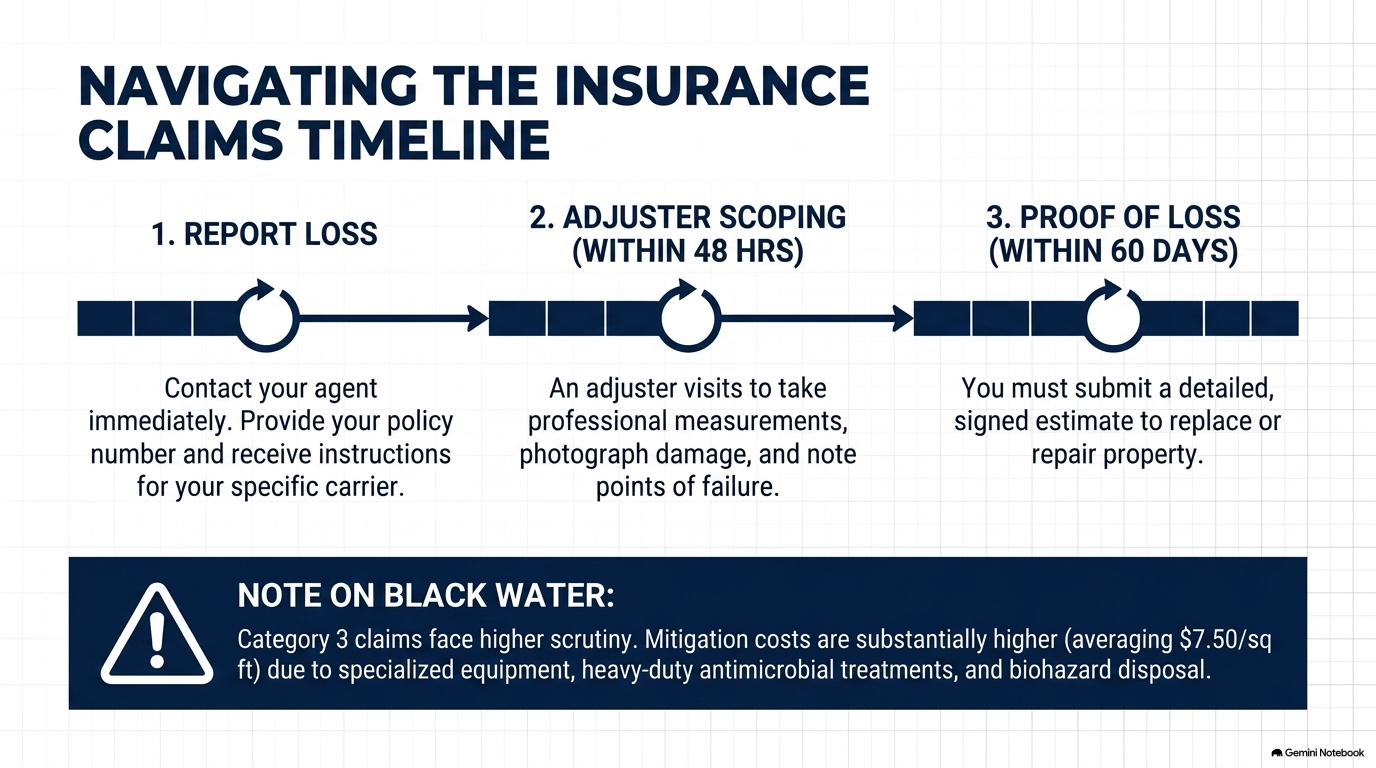
The financial and safety implications of the 50% rule are profound for homeowners. Once the 50% threshold is crossed—whether through a single catastrophic event or cumulative upgrades—the owner is legally compelled to bring the entire structure into compliance, which often necessitates costly elevation. Strategically, inspectors must also advise owners on the 30-day waiting period for National Flood Insurance Program (NFIP) coverage to take effect. Failure to account for the 50% threshold or the insurance lead time can lead to catastrophic financial exposure for the property owner during a flood event.
Technical Site Assessment and Hazard Identification
The inspector's primary role in a site assessment is to identify the specific nature of the flood hazard and the mechanical pressures it will exert on the residence. Understanding the "flood profile" allows for a specialized mitigation plan that addresses specific structural threats.
Flood Profile Mapping
- Overbank Flooding: Occurs along rivers and streams due to excessive precipitation. These events are often slow-moving and shallow but can last for days or weeks, leading to extensive "soaking" damage.
- Flash Flooding: Caused by heavy localized rain, dam failures, or debris collapse. Characterized by high velocity and rapid onset, posing a significant threat to structural stability.
- Drainage-Related Issues: Occur when rainwater cannot flow away due to blocked culverts, sewers, or impervious surfaces. While often localized, these can cause repetitive nuisance flooding against foundations.
Moisture and Contamination Classification
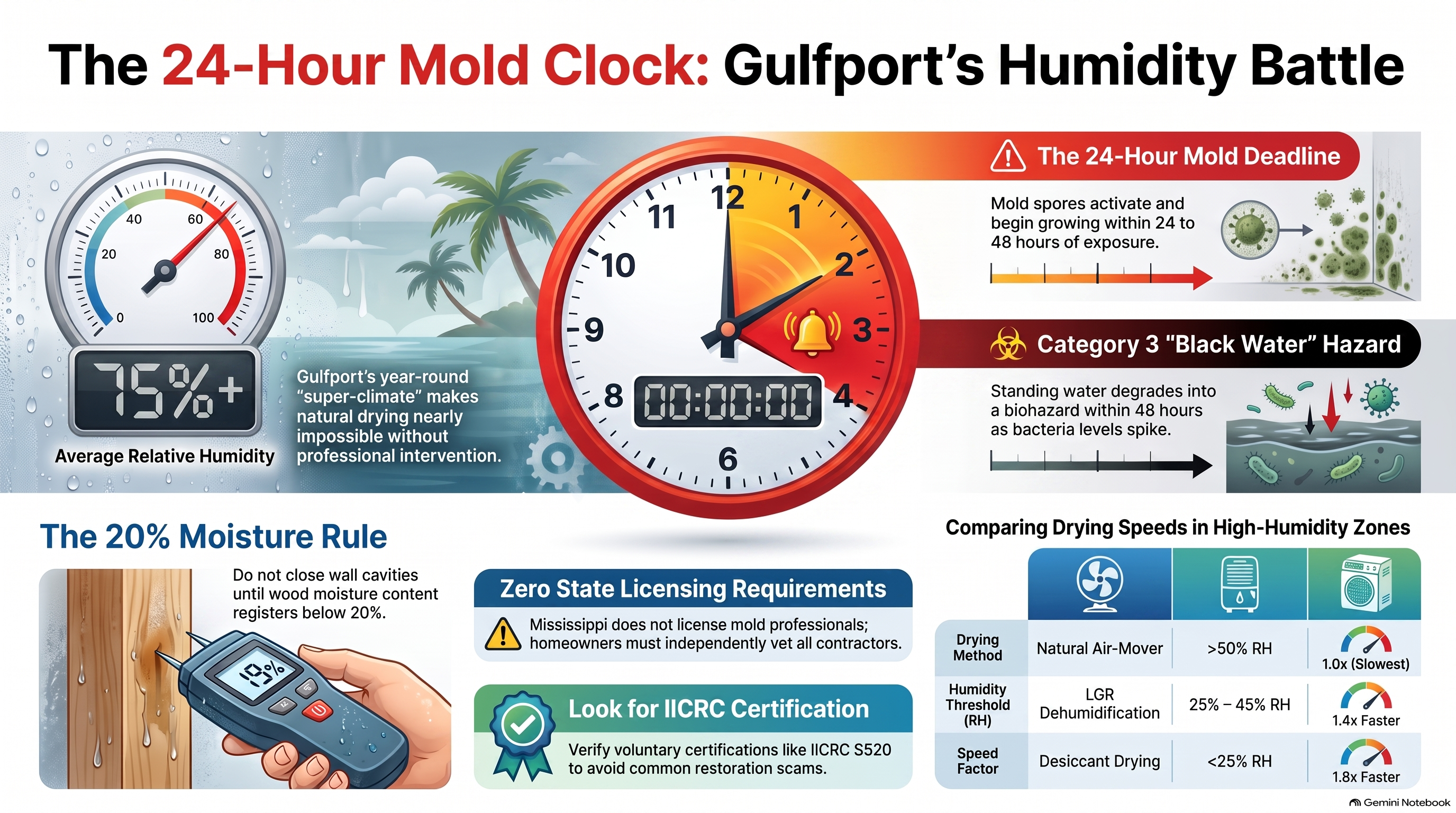
The IICRC S500 framework establishes baseline technical expectations for categorizing the water source, which dictates the safety protocols and remediation scope.| Water Category | Classification | Description & Remediation Scope || ------ | ------ | ------ || Category 1 | Clean | Originates from a sanitary source (e.g., broken water supply line). Minimal safety risk. || Category 2 | Gray | Contains significant contamination (e.g., dishwasher or washing machine discharge). Potential for discomfort or sickness. || Category 3 | Black | Highly unsanitary (e.g., sewage backup, rising surface water). Requires stringent decontamination and PPE. |
The "So What?" Layer
Even "slow and shallow" flooding poses a catastrophic risk to material composition. Water velocity as low as six inches can knock a person off their feet, while two feet of moving water can float a vehicle. From a structural standpoint, prolonged soaking causes wood to swell, crack, or warp. Gypsum wallboard (drywall) is particularly vulnerable; it loses structural integrity and will fall apart if bumped while wet. The longer materials remain saturated, the more pollutants and sediments they absorb, often necessitating total replacement regardless of the flood's initial depth.
Floor Drain Plug: An inexpensive option for the lowest opening. Best for depths under 1 foot. Con: Can be ejected by high pressure; prevents normal drainage of laundry spills.
Standpipe: A pipe inserted into the drain. It is more secure than a plug because water pressure cannot easily blow it out. Effective for depths under 1 foot.