The Legal Baseline: Your Right to a Safe Workplace
While OSHA has no specific mold standard, federal law still protects workers from moisture hazards. Under the Occupational Safety and Health Act, Section 5(a)(1) — the General Duty Clause — employers must provide a workplace free from recognized hazards that cause, or are likely to cause, death or serious physical harm. Chronic dampness and mold growth qualify as recognized hazards, which means an employer who ignores an active leak, visible mold, or a persistently humid environment is on the wrong side of federal law. If you have been weighing up black mold removal for a home around Mckinney, TX, this guide covers how it actually works, what it tends to cost, and where the results usually fall short.
Where Workplace Mold Hides
Mold does not always look like fuzzy black patches. In offices and commercial buildings it hides in HVAC systems and ductwork — condensation on coils and clogged drip pans distribute spores through the vents — in ceiling voids above acoustic tiles where roof leaks go unnoticed, inside wall cavities where pipe condensation pools, and in crawl spaces and basements where poor foundation slope allows groundwater intrusion. The inspector's senses are the first tools: a persistent musty, earthy odor indicates hidden growth, and bubbling paint, warped baseboards, and frequent window condensation are visual flags.
From Building Decay to Biological Impact
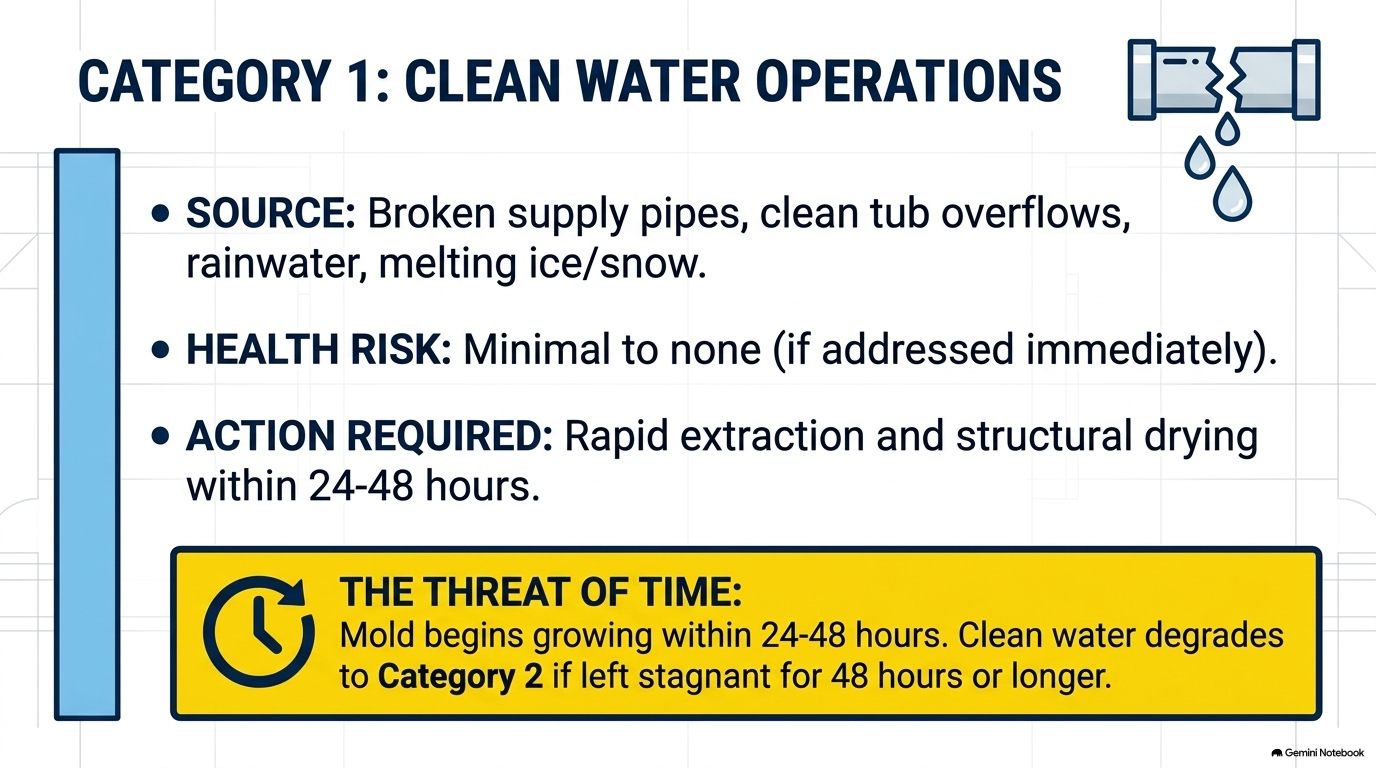
Unchecked moisture follows a predictable path: water intrusion within 24 to 48 hours gives spores the environment they need to germinate; sustained humidity above 60% accelerates growth; and what starts as a structural problem — warped wood, degraded drywall — becomes a biological one, with airborne spores and mycotoxins affecting the people inside. The diagnostic matrix in the full infographic traces this progression from first water entry to human illness.
What Workers Can Do
Document the moisture source and visible growth with dated photos, notify management in writing, and report persistent inaction to the local health department or OSHA. Employers who respond correctly contain the source, remediate per IICRC standards, and verify with clearance testing. Mold in the workplace is a solvable problem — but only when it is treated as the recognized hazard the law says it is.